Lymphedema is a condition characterized by fluid accumulation in the tissues and lymphatic congestion, commonly presenting as swelling in the legs, arms, hands, or feet. It is often accompanied by dilation and proliferation of lymphatic capillaries. In tropical regions, a major cause is filarial infection, also known as elephantiasis.
In Thailand, lymphedema is currently found among patients who have undergone surgery and radiotherapy for cervical cancer or breast cancer. This is because surgeons often need to remove lymphatic vessels and lymph nodes during the operation, while postoperative radiotherapy inevitably causes damage to the lymphatic drainage system. As a result, lymph cannot be properly drained, eventually leading to swelling and enlargement of the legs or arms.
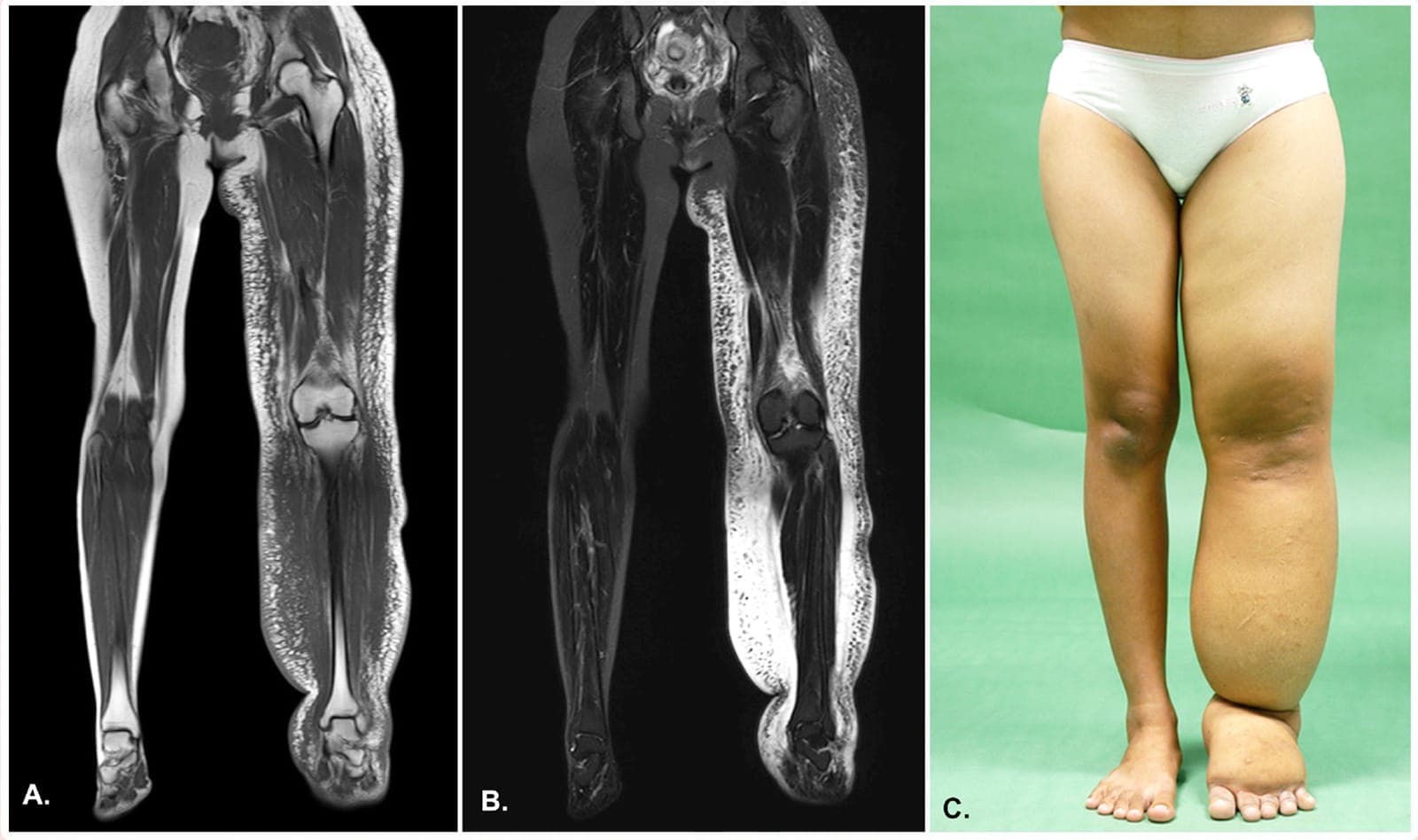
1. Primary Lymphedema
1.1 Congenital Lymphedema
Swelling of the arm or leg present since birth.
Or found in port-wine stain with limb overgrowth or varicose veins.
1.2 Lymphedema Praecox
Swelling before age 35, seen in children intolerant to formula or food.
Or preceded by injury, such as insect bites or a sprained foot.
1.3 Lymphedema Tarda
Swelling beginning after the age of 35.
2. Secondary Lymphedema
-Swelling after surgery or radiotherapy, such as following breast or uterine cancer treatment—occurring in nearly all cases (sometimes up to 42 years later) after lymph node removal.
-Filarial infection (elephantiasis), rare in Thailand but still common in tropical countries such as India, Bangladesh, and parts of Africa.
Lymphedema is sometimes associated with other disorders such as vascular tumors, varicose veins, venous valve insufficiency, deep vein thrombosis, lymphatic tumors, peripheral nerve sheath tumors (neurofibromatosis), systemic lupus erythematosus (SLE), gout, or diabetic foot. A history of injury may also be present, including tripping, puncture wounds, insect stings, snake bites, traffic accidents, or any wound that previously caused swelling. Complications may eventually develop, such as cellulitis or erysipelas. Lymphedema may also worsen rapidly when triggered by certain foods, leading to acute limb inflammation with high fever and chills—often mistaken for "infection."
Lymphedema Profunda
From the outside, swelling may not be noticeable, but patients often feel it themselves, describing their legs as disproportionately bulky. They may experience rapid weight gain, fat or cellulite swelling, or worsening symptoms after consuming foods such as chicken or dairy. Tender points can often be found along the lymphatic pathways in the legs. Patients tend to tire easily, become fatigued more quickly than expected for their age, struggle with climbing stairs, and complain of general weakness—“aching when standing, aching when sitting”—leading to irritability, easy fatigue, and loss of self-confidence. In more severe cases, symptoms may spread to the trunk, causing muscle aches, joint pain, shoulder and arm pain, neck and head pain, abdominal or back pain, and even breast pain.
Staging
Stage 0 Latend No visible swelling yet, even though lymphatic vessels have already been damaged.
Stage 1 Spontaneously reversible Lymphatic vessels are already damaged, leading to swelling with occasional pitting, but the swelling subsides on its own by the next morning.
Stage 2 Spontaneously irreversible Severe lymphatic vessel damage results in persistent swelling that does not subside, with pronounced pitting that lasts due to gel-like deposits accumulating beneath the skin (often worsened by foods such as pork or fish). Over time, the skin gradually hardens with thick fibrotic tissue.
Stage 3 Lymphostatic elephantiasis Severe lymphatic vessel damage causes the skin to become hard and irregular.
Severity levels of edema
Stage 1 The circumference of the swollen limb is larger than the unaffected side by no more than 4 cm.
Stage 2 The circumference of the swollen limb increases by more than 4 cm but not exceeding 6 cm, with persistent swelling of the arm or leg and occasional episodes of cellulitis.
Stage 3a The circumference of the swollen limb exceeds the other side by more than 6 cm, with frequent inflammation, various skin changes, thickened fingers, and lymph leakage between the toes.
Stage 3b Severe as in Stage 3a, but the swelling has extended to the opposite leg as well.
Stage 4 The most severe stage, resembling elephantiasis, with massive swelling forming lumps, darkened and rough skin, wart-like growths, thickened and coarse texture resembling stingray skin or cauliflower, and oozing lymph fluid.