Department of Alternative Medicine
Department of Thai Traditional and Alternative Medicine
The keen observation of Thai ancestors noted that some children, when bitten by mosquitoes, ants, or insects, would develop swelling, itching, blistering, fragile skin, rapid inflammation, and wounds that healed slowly, often with pus, abscesses, or oozing lymph fluid. Once healed, these often left behind widespread rash-like marks, which were referred to as Impaired lymph In some adults, old mosquito bite scars leave the legs or body mottled, a condition sometimes referred to as Poor lymph These conditions are generally understood by physicians as allergy of unknown origin, or sometimes thought to be an allergic reaction to mosquito saliva.
Poor lymph disorder It is a phenomenon in which an organ experiences congestion, with impaired lymphatic drainage. When chronic, this leads to stagnation and accumulation of waste products that are not properly eliminated, making inflammation more likely—especially when triggered by dietary factors such as animal products (meat, eggs, milk), combined with secondary skin infections, eventually developing into Bad lymph sickness
Lymphatic disorder It presents with a wider variety of signs and symptoms than previously recognized and may be considered a group of disorders encompassing conditions such as varicose veins, osteoarthritis of the knee, psoriasis, chronic skin rashes, systemic lupus erythematosus (SLE), rheumatoid arthritis, lipedema, obesity, and disproportionate lower body enlargement (large thighs, bulky calves). It also includes various types of swelling associated with gout, diabetes, hypertension, as well as cancer and its complications or consequences of cancer surgery. In the latter case, it is estimated that there are more than 300,000 patients across Thailand suffering from swelling after surgery for breast cancer or cervical cancer.
The chronicity of various diseases, when persisting over time, eventually leads to a state of Poor lymph This further intensifies the severity of symptoms and accelerates disease progression. Common complaints include calf pain, leg pain, or lower back pain in working-age individuals (fatigue when climbing stairs, poor walking endurance, easy exhaustion); generalized body aches and soreness; poor blood and lymph circulation; difficulty in movement with discomfort when standing up, sitting down, or walking, affecting both the general population and the elderly; and pain in cancer patients. All of these share a common basis in poor lymphatic function. In our practice, we have treated terminal cancer patients who suffered severe pain requiring 5–10 morphine tablets daily; once lymphatic therapy was initiated, morphine use could be reduced to zero from the very first day.
The pathology of the lymphatic circulation system was decoded through morphological studies using both light and electron microscopy, which revealed the pre-lymphatic system as a honeycomb architecture (Ekataksin et al., 2000) and identified the progenitor cell of lymphatic vessels, termed the endotheliofibroblast (a hybrid between endothelial and fibroblast cells) (Ekataksin et al., 2006). These discoveries laid the foundation for innovative therapies in the treatment of lymphedema by Compression Therapy•Twisting Tourniquet Technique Together with the experience of treating more than 3,700 patients, both Thai and international (from 37 countries), studies using magnetic resonance imaging (MRI) have led to new discoveries that advanced our understanding and generated new knowledge. These findings also enabled us to distinguish that lymphedema can be classified into two domains as follows:
The first domain is classical lymphedema (also called superficial lymphedema), which is clearly visible as swelling and enlargement of the limbs. It is a condition in which lymphatic vessels become dilated and proliferate, leading to fluid accumulation. This includes all forms of lymphedema commonly described in medical textbooks.
The second domain is deep lymphedema, which may not appear swollen from the outside. However, patients may have experienced occasional swelling, such as after sitting for long periods, or their thighs may simply look unusually bulky. MRI clearly reveals the formation and accumulation of lymphatic fluid in bands within the deep fat layers. These areas of deep lymphatic congestion can be detected as tender lines upon examination.
First to describe the Slaengh mechanism, explaining how animal-derived foods can exacerbate disease (2008).
Identified and described a new disease entity, Lymphedema profunda (Deep Lymphedema / 深部リンパ浮腫), in 2009.
Pioneered lymphedema treatment in Thailand and founded the Lymphedema Day Care Center, recognized as the largest center in Asia (2010).
First to observe and propose that pork consumption may act as a trigger for lipodermatosclerosis (2011).
Provided the first formal definitions of Poor lymph disorder and Bad lymph sickness (2012).
Identified ankle arthropathy–related lymphatic dysfunction as a key factor underlying primary lymphedema, varicose veins, and knee arthritis (2013).
Pioneered the establishment of a new medical discipline, Slaengh Medicine (2014).
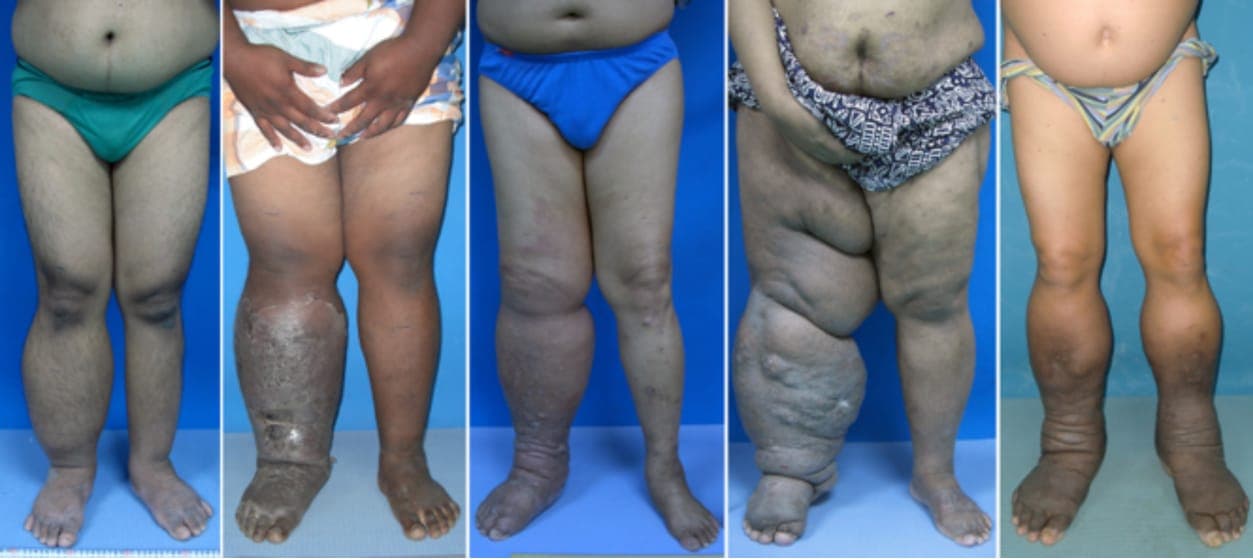
Picture 1. A male patient with primary lymphedema had long-standing latent ankle swelling that went unnoticed until dietary triggers caused the swelling to manifest clearly in the right leg—affecting the shin, calf, ankle, dorsum of the foot, and toes. It progressed to permanent swelling, extending up to the thigh. Each dietary trigger led to inflammation, high fever, and peeling skin, while the skin gradually became rough and hardened. Impaired lymphatic function caused the skin to darken and lose its brightness. In some cases, the swelling also extended to the left leg.
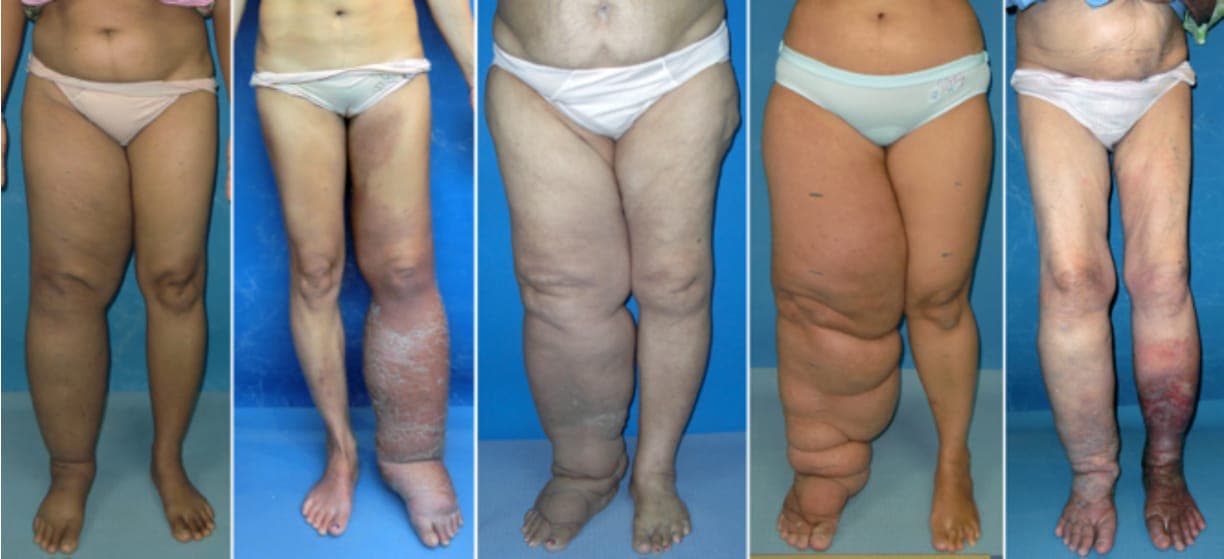
Picture 2. A female patient with primary lymphedema had long-standing latent ankle swelling that went unnoticed until dietary triggers caused visible swelling, initially in one leg—affecting the shin, calf, ankle, dorsum of the foot, and toes. It progressed to permanent swelling, extending up to the thigh. Each dietary trigger (meat, eggs, milk, animal products) induced inflammation, high fever, and skin peeling, while the skin gradually became rough and hardened. Impaired lymphatic function led to darkened, dull skin. In some cases, the swelling also spread to the other leg.
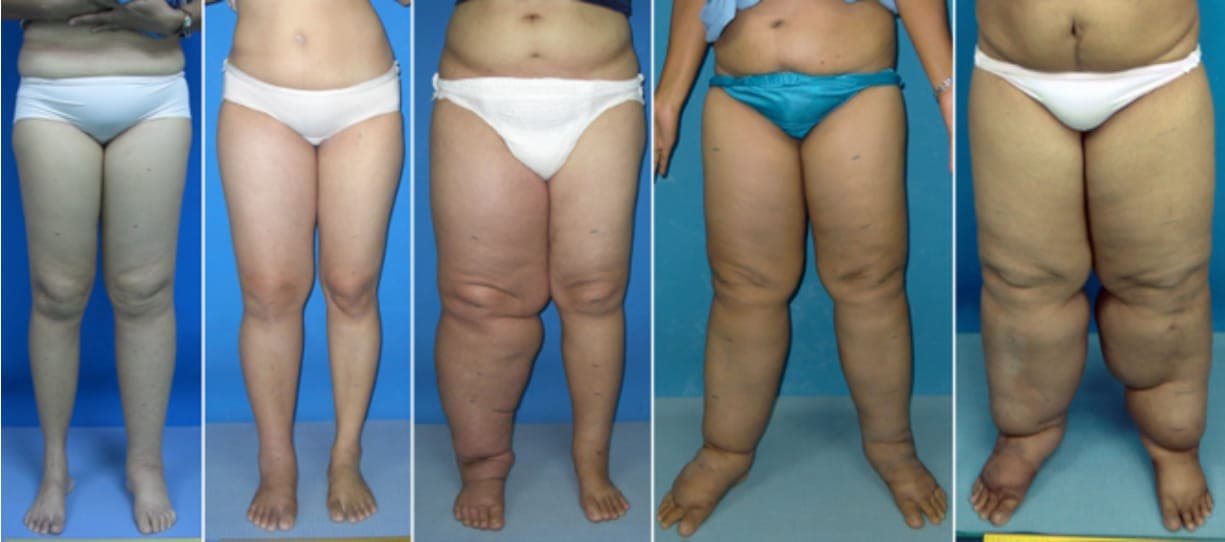
Picture 3. Female patients with primary lymphedema (cases 1, 2, and 3) and secondary lymphedema (cases 4 and 5), with swelling extending to the groin.
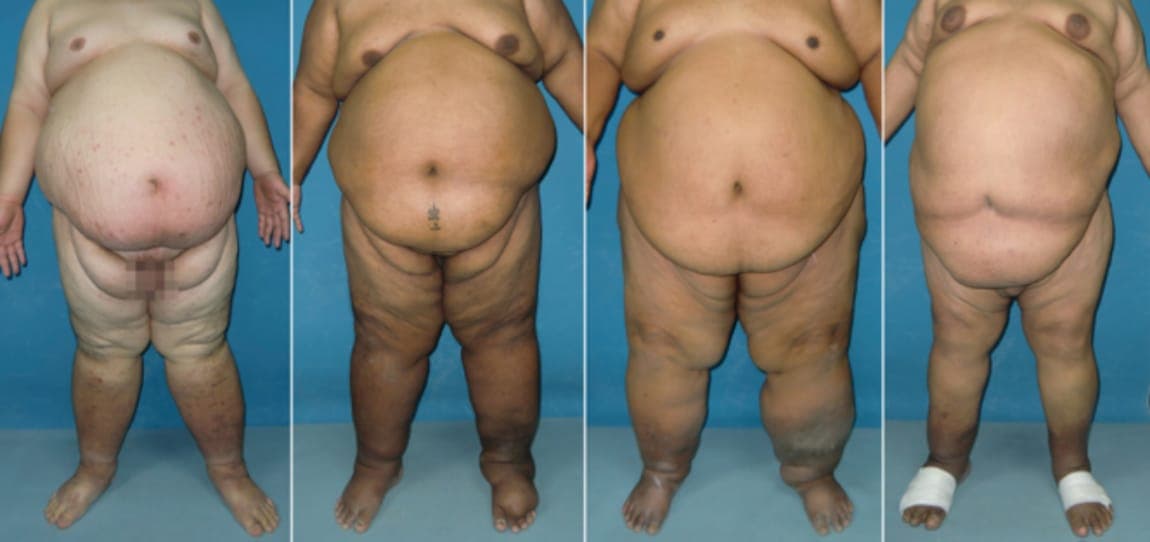
Picture 4. An obese male patient with primary lymphedema showed pathological changes at the ankle, where latent swelling had been present for a long time without his awareness, until it manifested as leg swelling, darkened legs, and generalized body swelling.
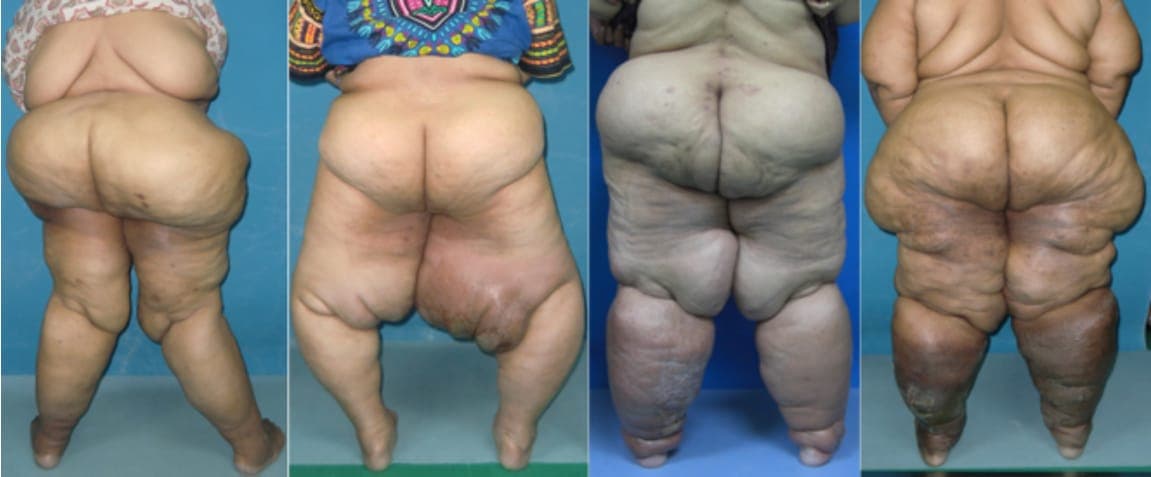
Picture 5. An obese female patient with primary lymphedema showed pathological changes at the ankle, where latent swelling had been present for a long time without her awareness, until it manifested as leg swelling, darkened legs, and generalized body swelling. The swelling progressed from the ankles to the knees, resulting in both knee valgus (knock-knee) and knee varus (bow-leg) deformities.
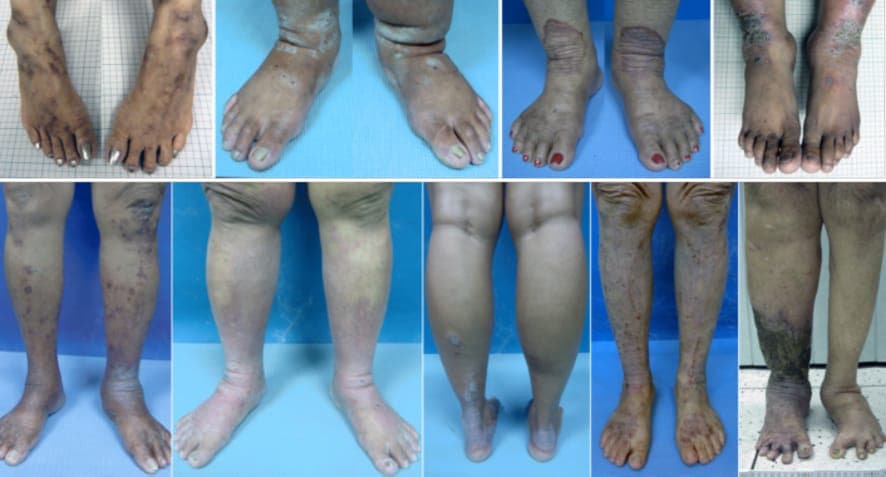
Picture 6. Patients with impaired lymphatic function present in various forms. In some, lymphedema becomes permanent, but in all cases there is underlying latent swelling at the ankles. For some patients, this becomes noticeable because dietary triggers (meat, eggs, milk, animal products) cause the pathology to manifest clearly at the ankles—for example, itchy rashes, itching of the legs, arthritis, tendonitis, ankle collapse, or toe deformities.
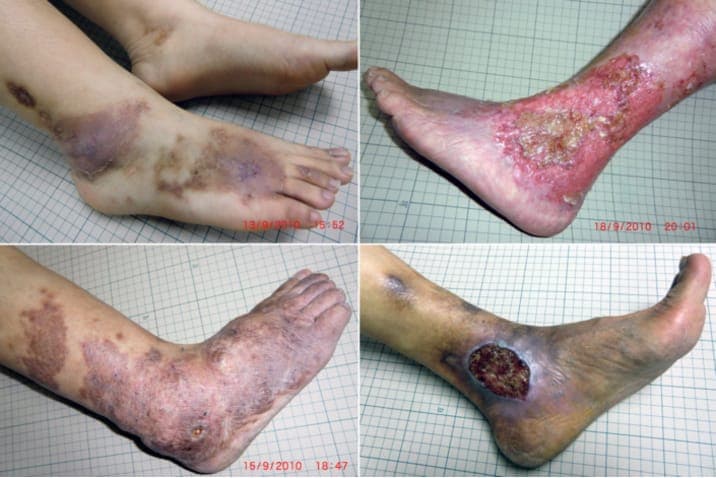
Picture 7. Patients with impaired lymphatic function in whom ankle swelling is clearly evident may experience repeated dietary triggers, leading to chronic ulcers. The most aggravating foods are pork (as well as beef and other four-legged animals), pork bone soup, and noodle broth.
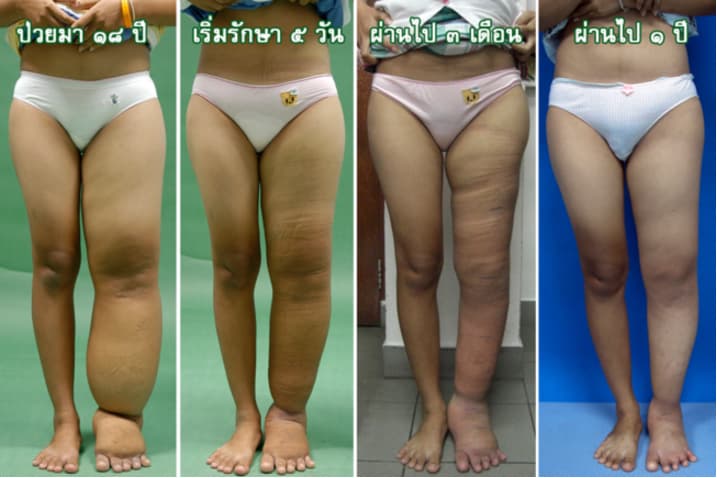
Picture 8. A congenital lymphedema patient (18 years old, from Suphan Buri). The first photo shows the leg swollen for 18 years; the second photo after 5 days of therapy; the third photo after 1 month of continued self-care at home; and the fourth photo after 1 year, showing the once-swollen leg reduced and slimmed down.
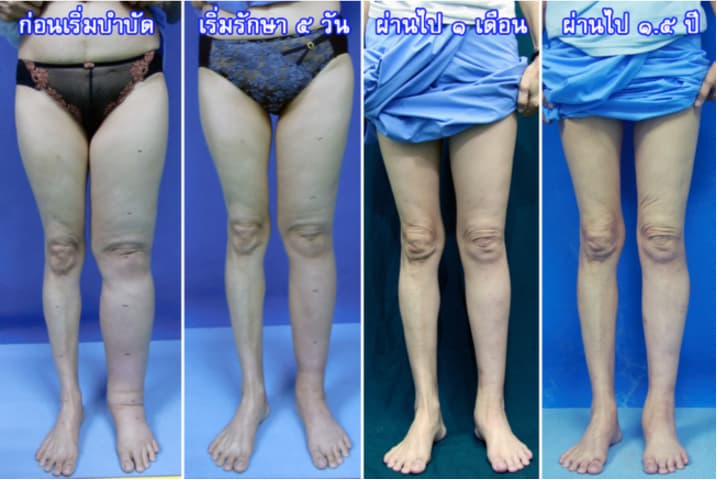
Picture 9. A secondary lymphedema patient (54 years old, from Bangkok) following surgery for cervical cancer. The first photo shows swelling of the left leg before treatment; the second photo after 5 days of therapy; the third photo after 1 month of continued self-care at home; and the fourth photo after one and a half years, showing the previously swollen leg gradually reduced and slimmed down.
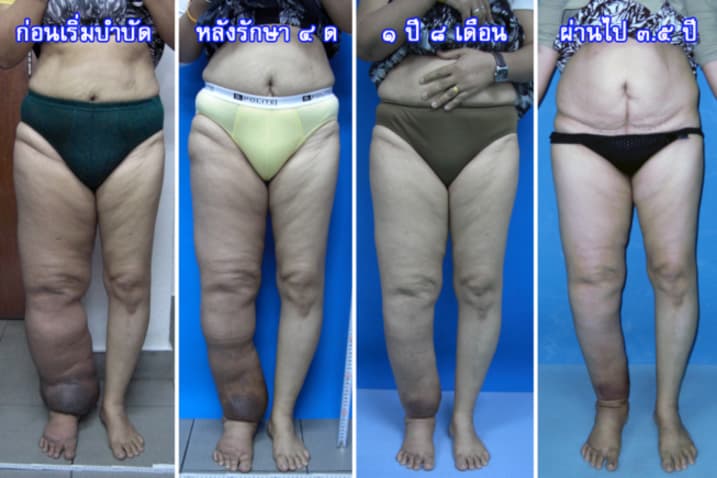
Picture 10. A secondary lymphedema patient (49 years old, from Bangkok) following surgery for cervical cancer. The first photo shows swelling of the right leg that had persisted for 7 years before treatment; the second photo after 5 days of therapy and 4 months of continued care at home; the third photo after 1 year and 8 months; and the fourth photo after 3 and a half years, showing the once-swollen leg gradually reduced and slimmed down, with the skin tone almost fully restored.