
Swelling
Swelling (medical term: edema) is the enlargement of a limb or body part caused by an abnormal buildup of lymphatic fluid in the tissues. It usually starts mild and worsens over time, and tends to feel heavy or tight rather than painful.
Privacy-reviewed clinical examples for professional and educational review
Swelling (medical term: edema) is the enlargement of a limb or body part caused by an abnormal buildup of lymphatic fluid in the tissues. It usually starts mild and worsens over time, and tends to feel heavy or tight rather than painful.
Erysipelas is a bacterial skin infection that appears as a sharply defined, red, warm, rapidly spreading rash, often with fever. People with lymphatic dysfunction are especially prone to repeated episodes because impaired lymph flow makes it harder for the body to clear bacteria from the skin.
Leg pain in lymphatic dysfunction often presents as a dull ache or feeling of heaviness that worsens with standing or walking. It results from excess fluid pressing on the muscles, nerves, and joints of the swollen limb.
As fluid accumulates around a joint such as the knee or ankle, the surrounding tissue tightens and restricts normal movement. This can cause stiffness, aching, and a reduced range of motion in the affected joint.
Chronic swelling stretches and dries out the skin, making it more prone to irritation, redness, and rash-like breakouts. These rashes can also signal an early skin infection and should not be ignored.
Itching is common in lymphatic dysfunction because stretched, dry skin loses its natural protective barrier. Reduced lymph flow can also let irritating substances build up beneath the skin, triggering the itch.
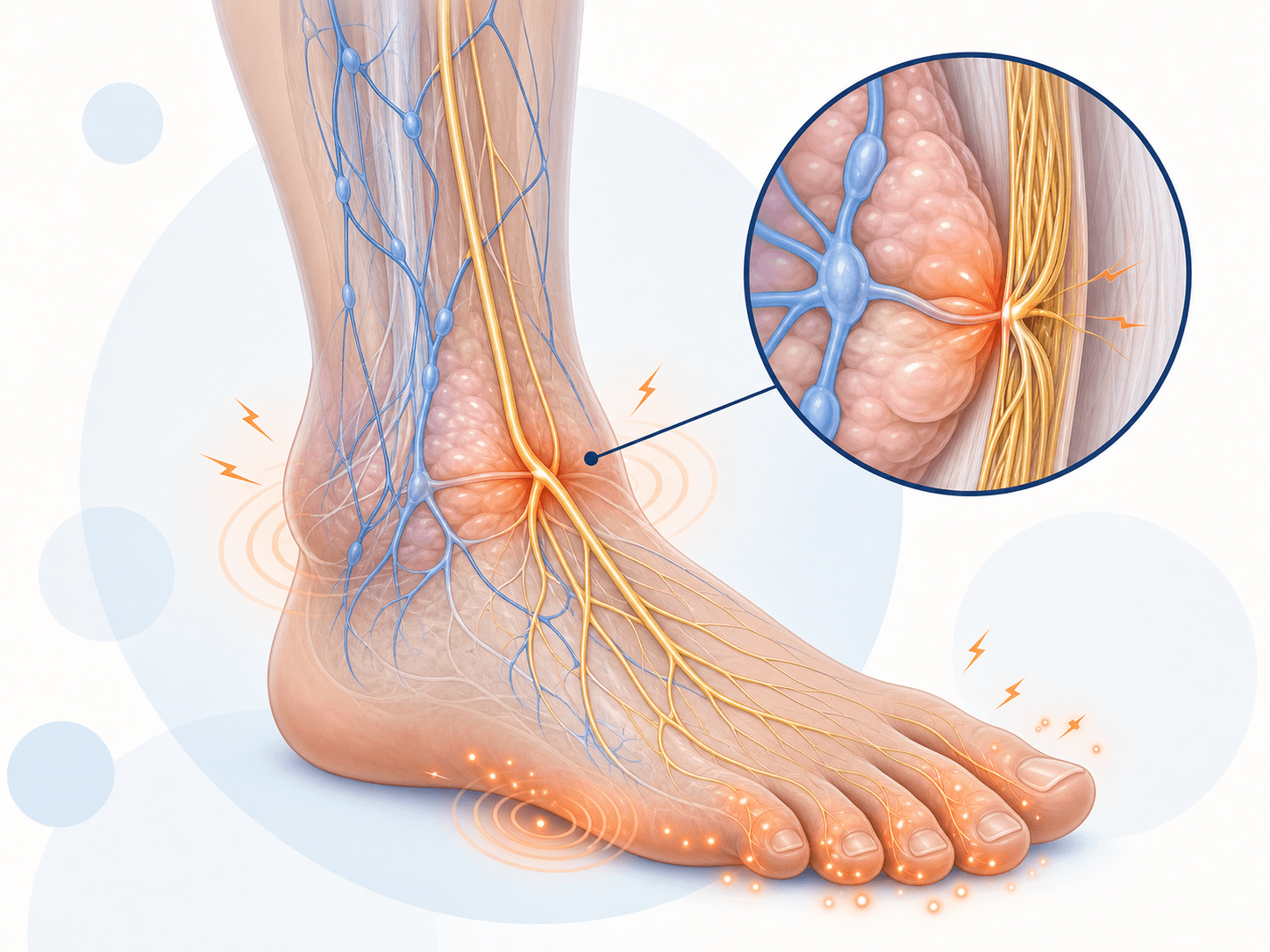
A tingling or 'pins and needles' sensation can occur when swollen tissue presses on nearby nerves. It is often an early warning sign that fluid is accumulating faster than the lymphatic system can drain it.
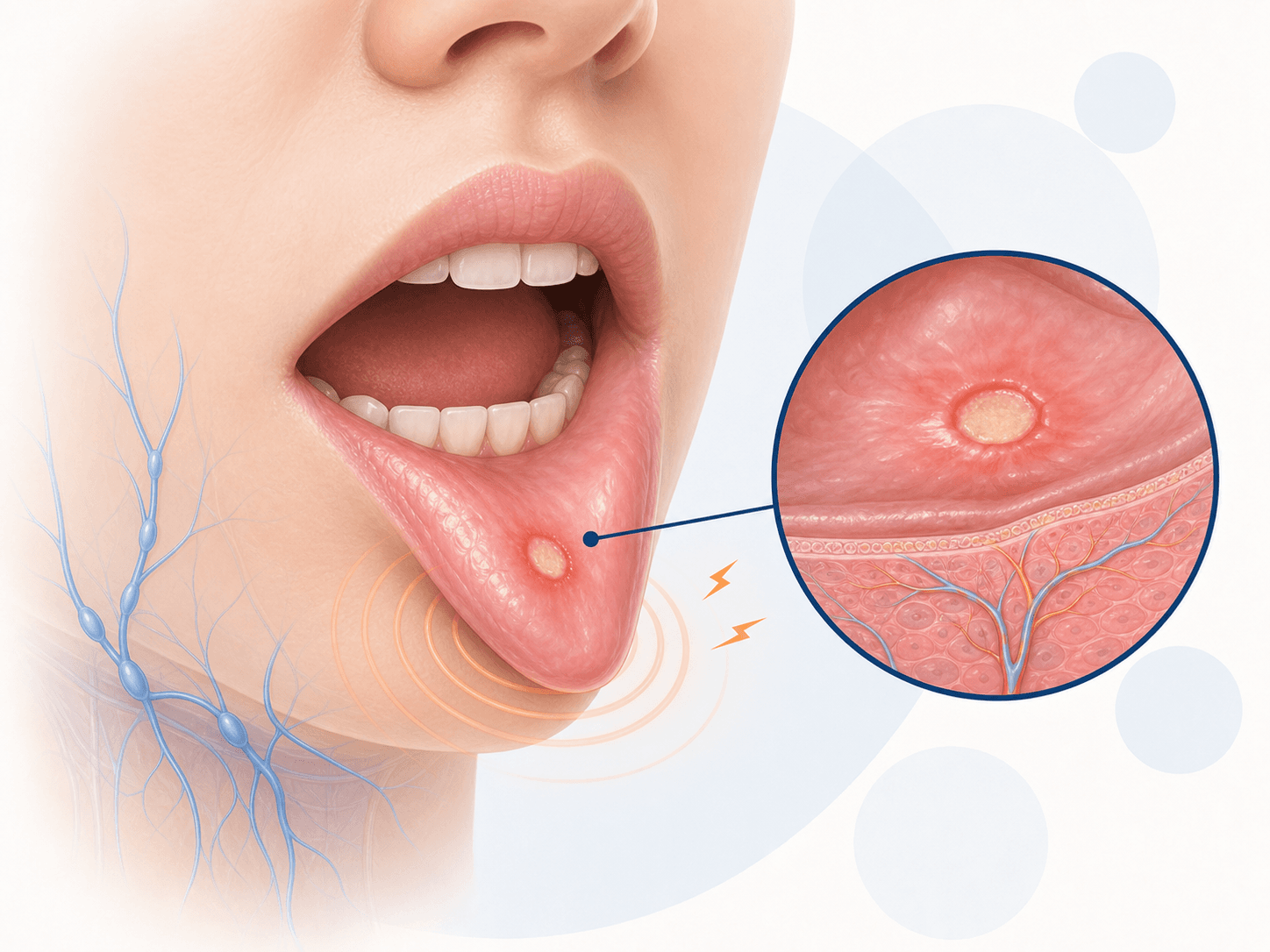
Some people notice a warm or burning sensation in the affected area, sometimes with small sores where overstretched skin has broken down. This reflects local inflammation building up under the skin as lymph fluid pools.
Long-standing lymphatic dysfunction can cause the skin to darken or develop freckle-like pigmented patches. This happens as chronic swelling and inflammation gradually change the skin's pigment-producing cells.
Persistent swelling can thicken and harden the skin over time, similar to a callus. This thickening (fibrosis) is a sign that the condition has progressed and the tissue has begun to change structurally.
When the lymphatic system is severely overwhelmed, clear or straw-colored fluid can leak directly through the surface of the skin. This seepage, called lymphorrhea, increases the risk of skin breakdown and infection.
Because lymph fluid carries the immune cells needed for tissue repair, poor lymphatic drainage slows the body's ability to heal cuts and scrapes. Minor injuries on a swollen limb can take much longer than usual to close.
In advanced cases, skin that has been stretched thin by chronic swelling can split or break open into a deep, gaping wound. These wounds heal slowly and carry a higher risk of infection due to impaired lymph drainage.
Increased pressure from fluid buildup can push on nearby veins, causing them to enlarge and twist into visible varicose veins. This is more common in limbs affected by long-term lymphatic dysfunction.
Fluid can collect into small, soft, fluid-filled pockets beneath the skin, forming cysts. These typically develop where lymphatic drainage is most restricted.
Chronic lymphatic dysfunction can cause fibrous tissue to build up under the skin, forming firm lumps or nodules. These develop as the body responds to long-term fluid retention and inflammation.